Custom Appliqué Patches — Layered Fabric Designs for Varsity Apparel
Dimensional, multi-texture custom appliqué patches for varsity jackets, letterman jackets, custom baseball jerseys and team uniforms. 100-piece MOQ, full in-house decoration, and 28+ years of team apparel manufacturing expertise.
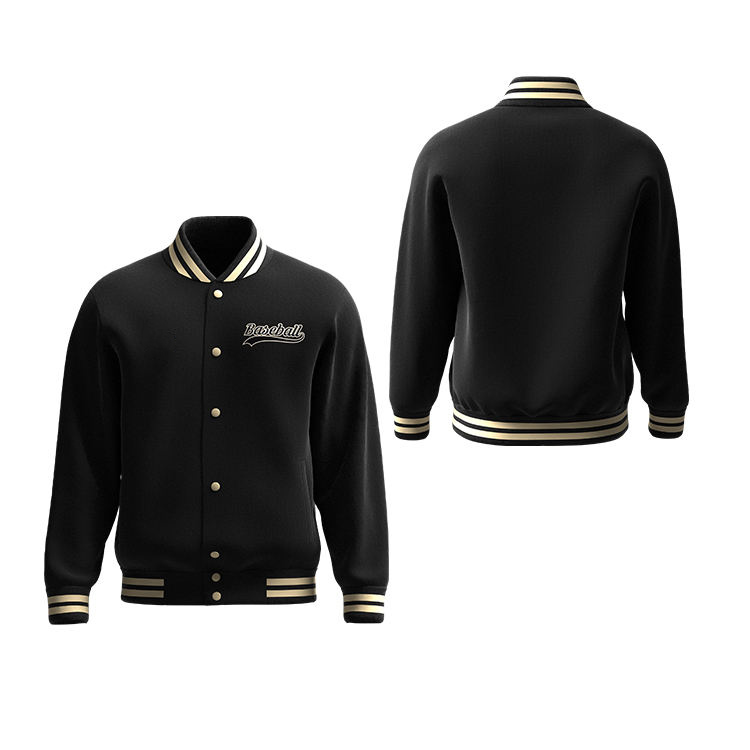
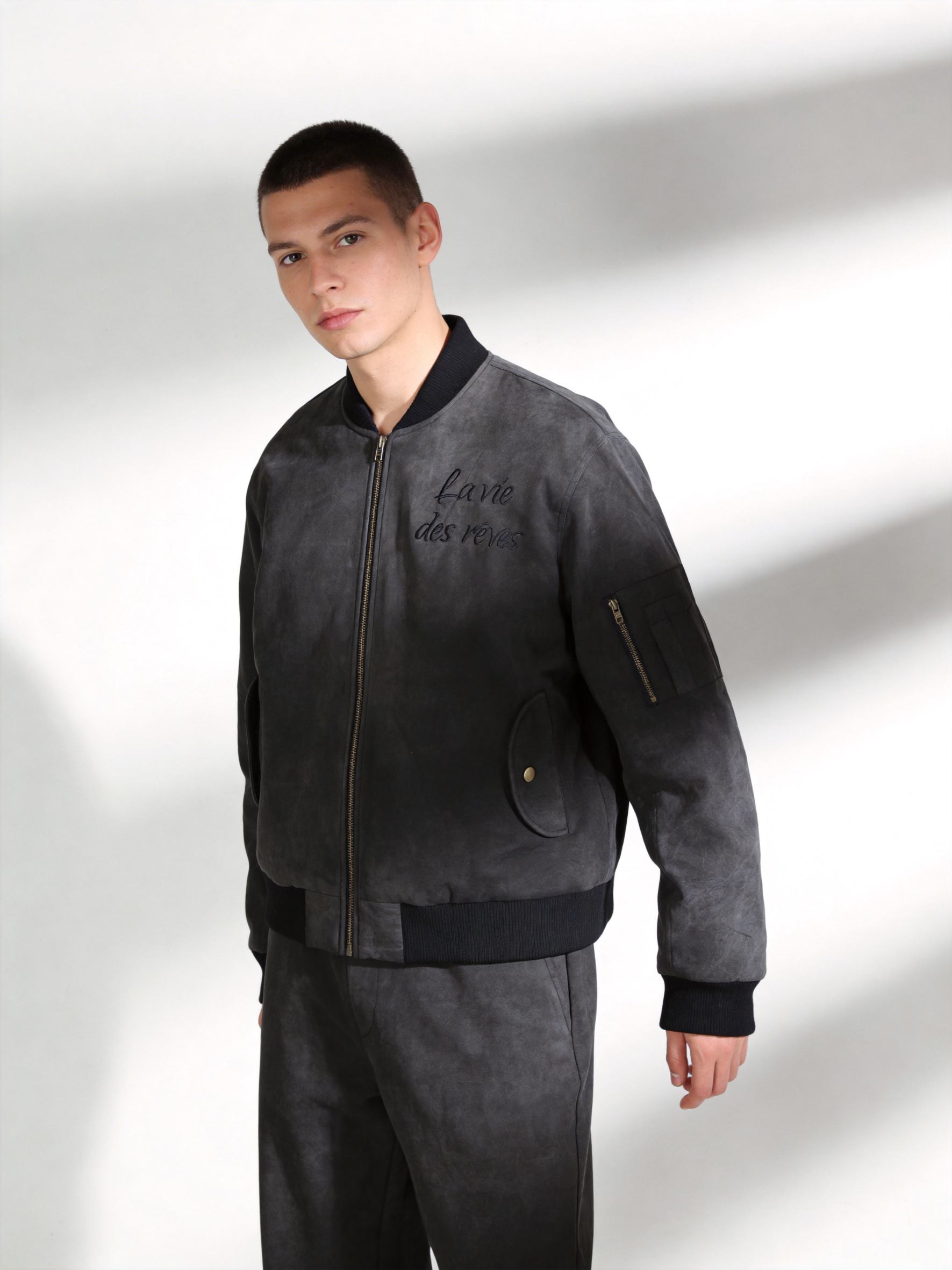
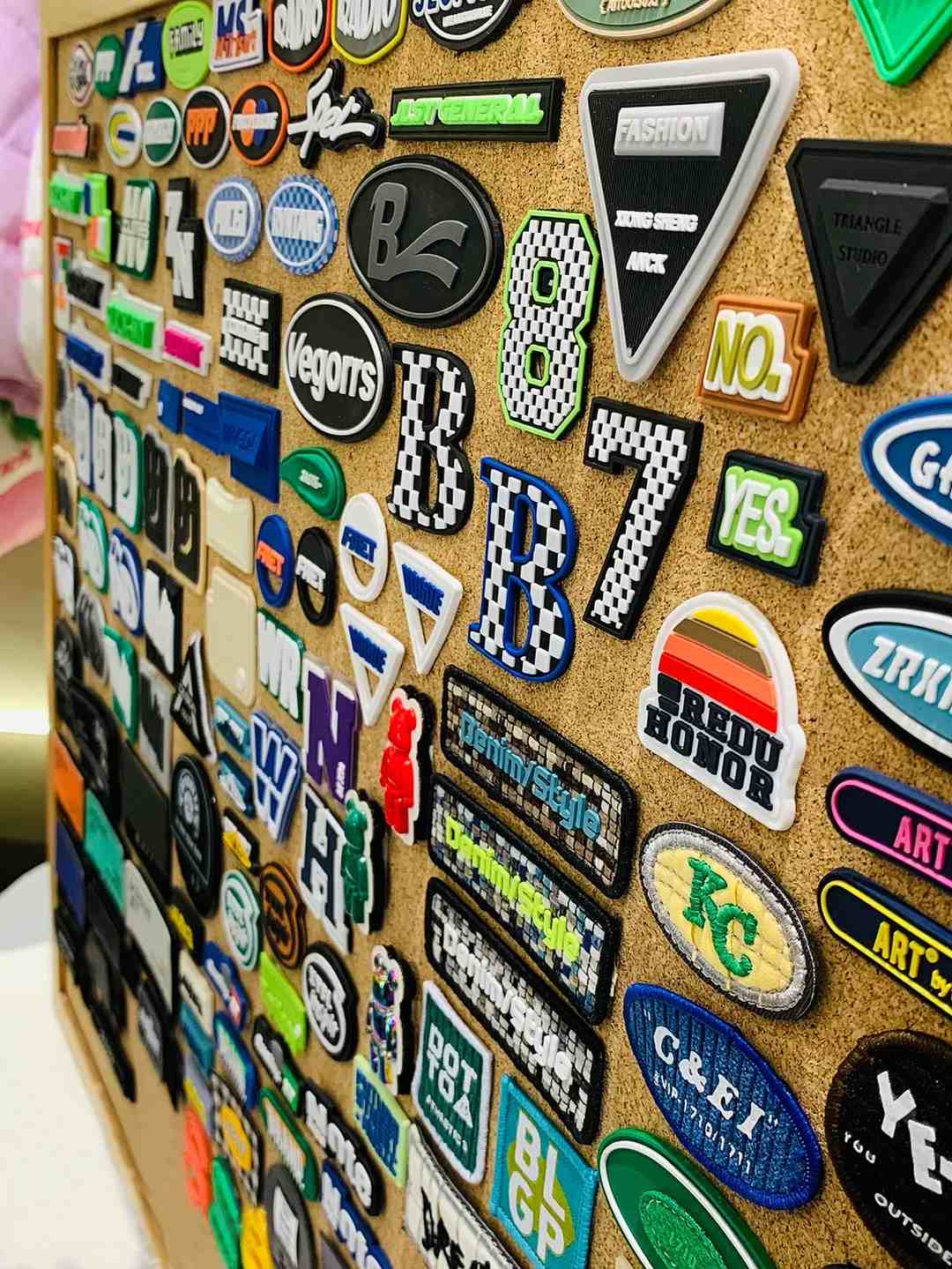
Custom Appliqué Patch Samples
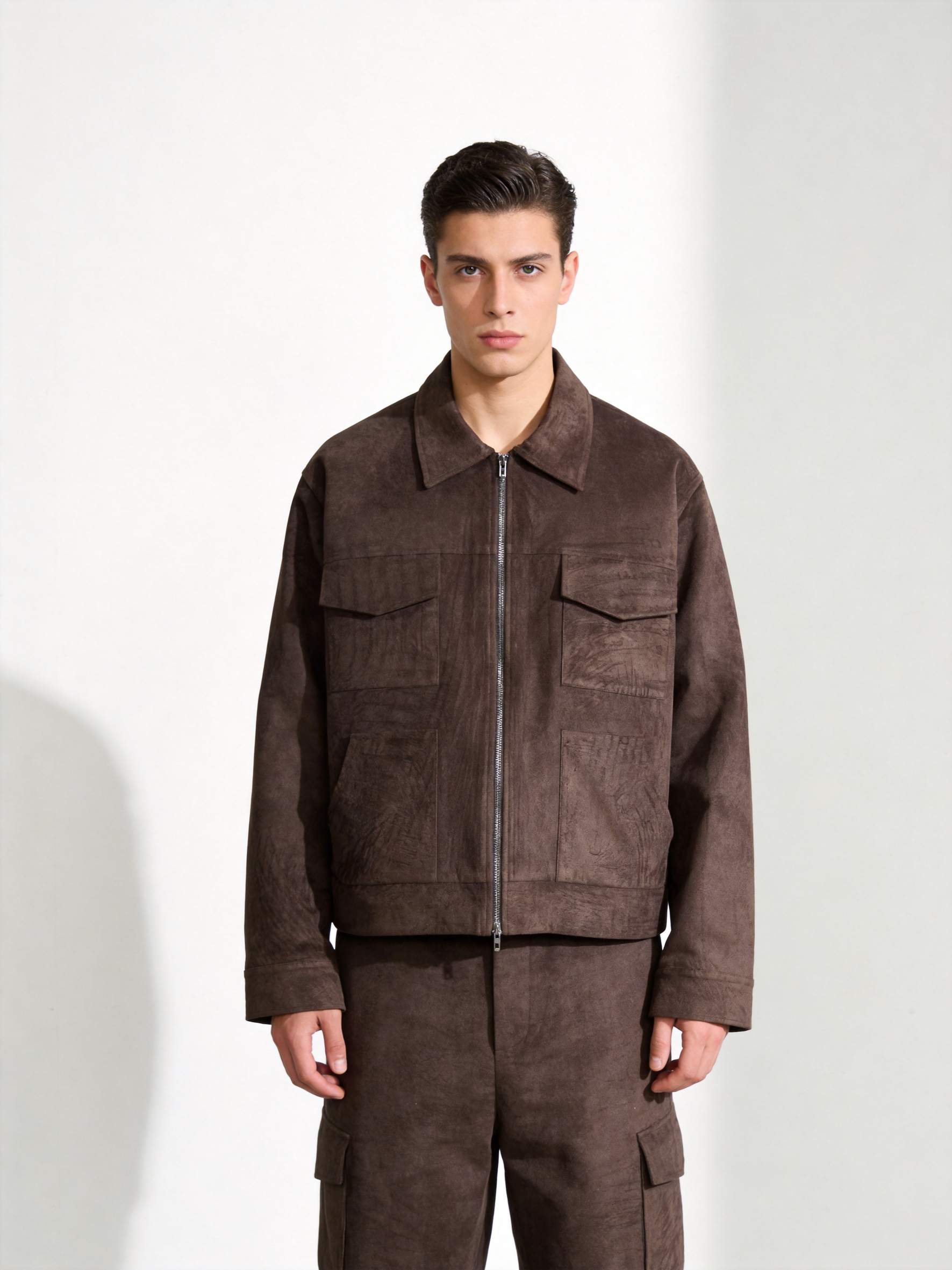
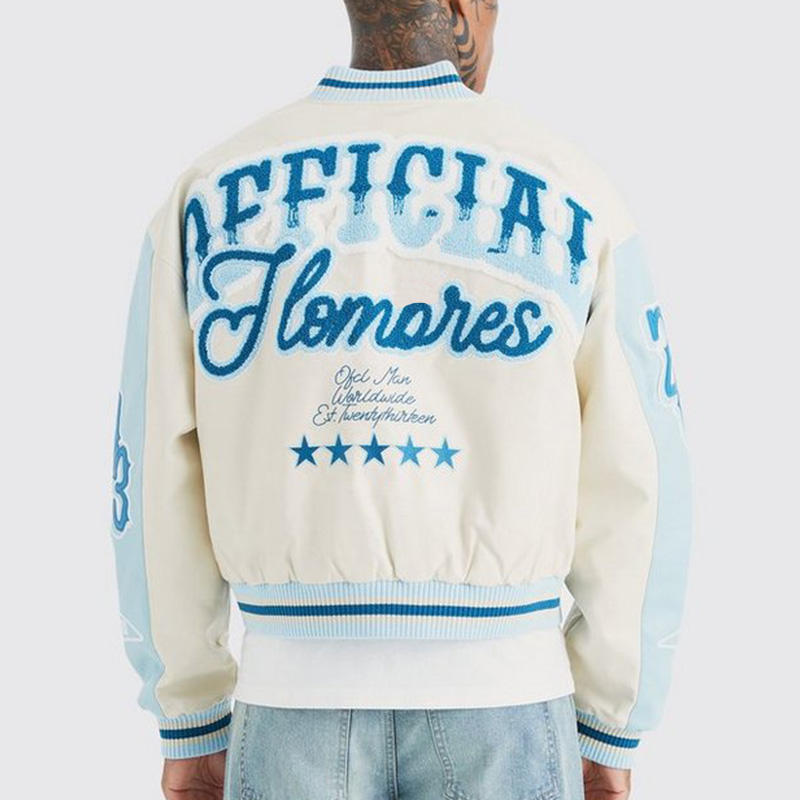
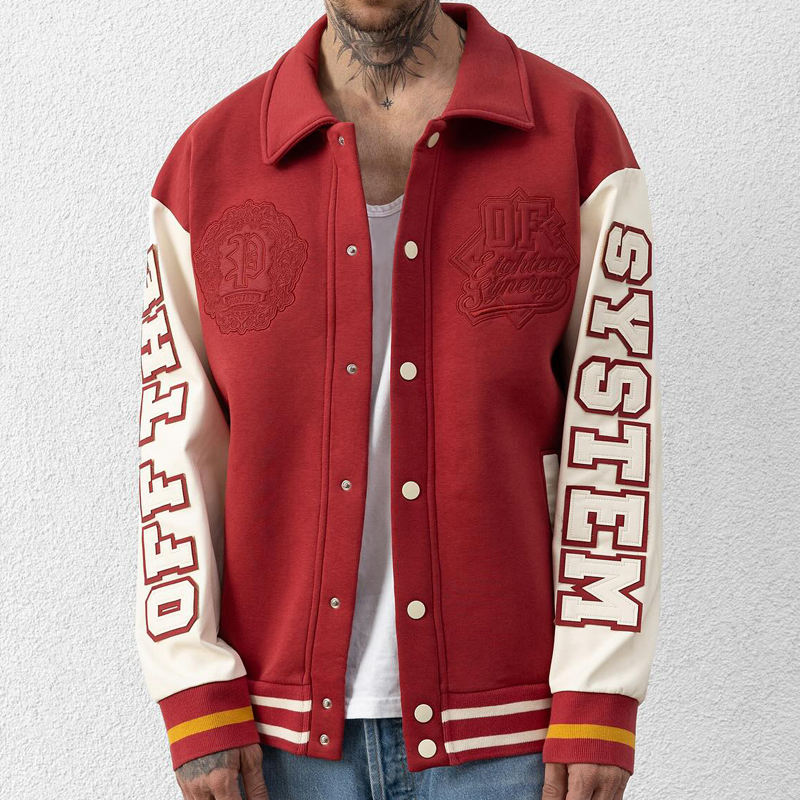
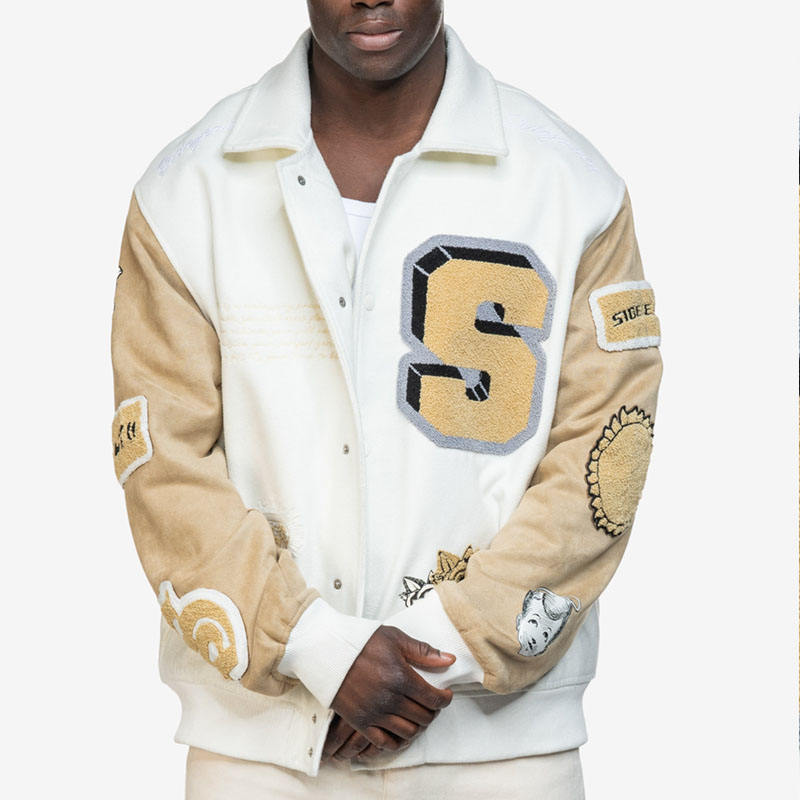
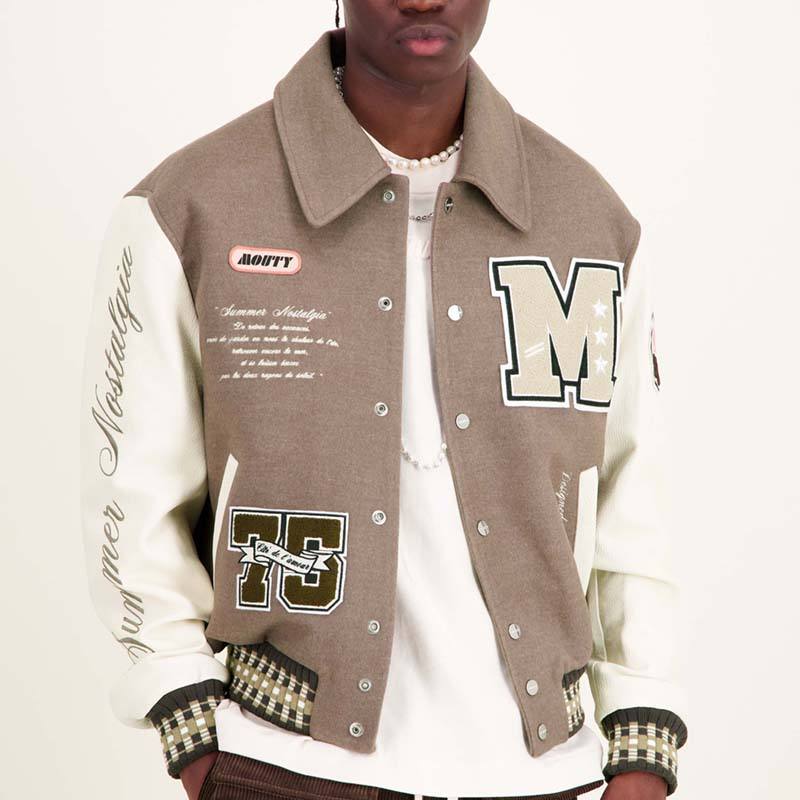
What Makes Custom Appliqué Patches Stand Out
Layered Fabric Depth & Texture
Multiple fabric layers create dimensional designs with rich color contrast and tactile appeal that flat embroidery cannot match.
Built to Last Through Wash Cycles
Stitched edges and durable twill or felt fabrics ensure custom appliqué patches hold shape and color wear after wear.
Unlimited Color & Fabric Combinations
Mix felt, twill, chenille and specialty fabrics in any color palette to match team identity and brand guidelines perfectly.
Perfect for Large Logo Placements
Appliqué handles oversized back patches, chest crests and sleeve logos on varsity jackets with clean, professional execution.
Fast Artwork Proofs & Strike-Offs
Receive digitized artwork layouts and physical decoration samples before bulk production to approve every detail with confidence.
Low MOQ from 100 Pieces
Test designs, launch capsule collections or outfit small teams without excessive inventory risk or upfront investment.
Related Decoration Techniques & Team Apparel
Custom Chenille Patches & Appliqué
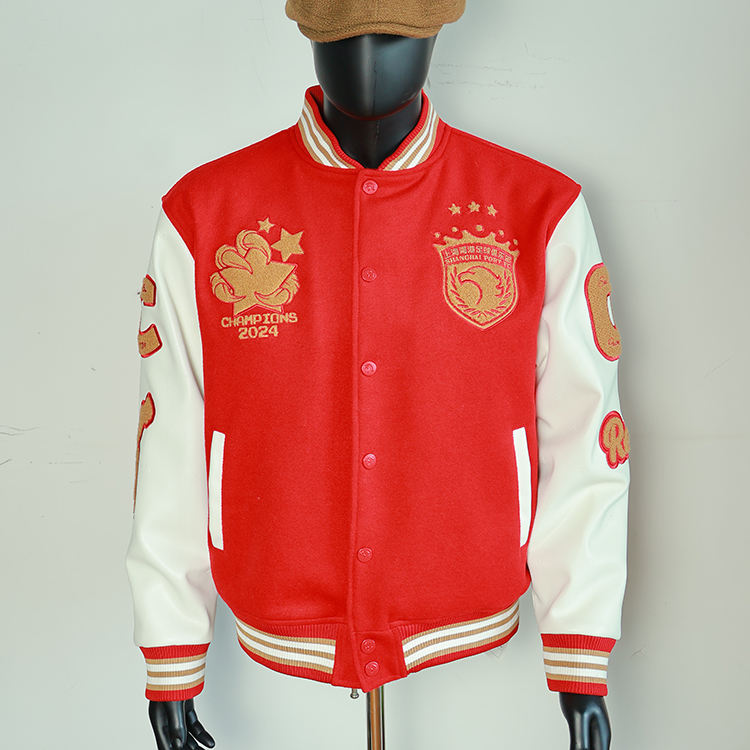
Custom chenille patches and appliqué combine raised, textured chenille yarn with precise stitching to create the dimensional varsity lettering and team logos that define authentic letterman jackets and team apparel. SELMOND produces chenille appliqué in-house with clean edges, consistent pile height and durable backing for jackets, jerseys and caps.
Get a Quote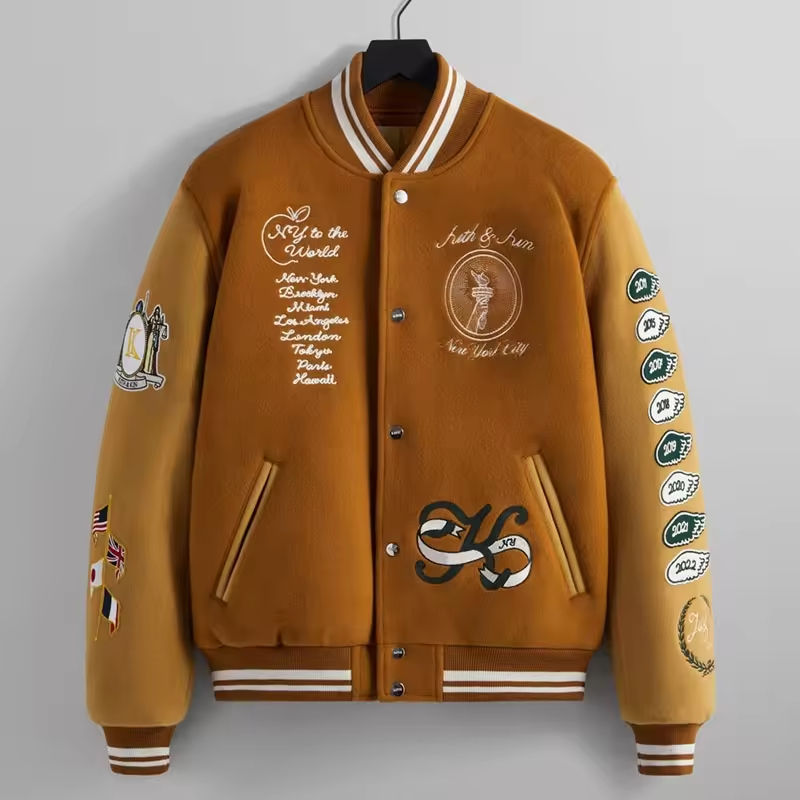
Chenille Letters
Chenille letters are the signature decoration on varsity and letterman jackets, featuring plush, raised yarn stitched onto wool or twill backing. SELMOND manufactures single-layer and layered chenille letters in any font, size or color combination, with tight borders and flat application that hold their shape through years of wear.
Get a Quote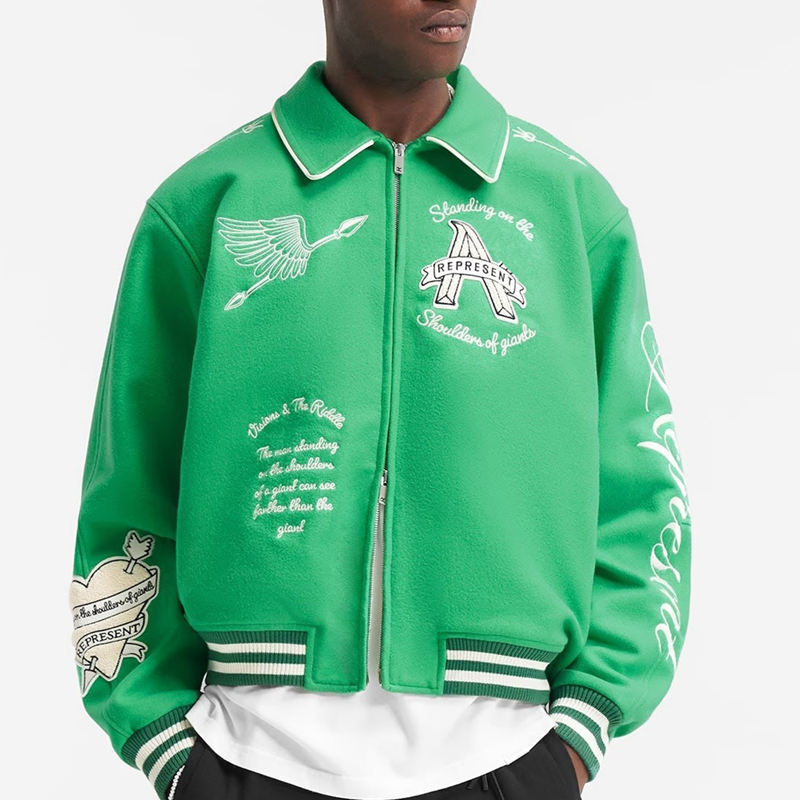
Custom Baseball Jerseys
Custom baseball jerseys manufactured with full in-house decoration including tackle-twill numbers and names, embroidered logos, chenille appliqué and full-dye sublimation. SELMOND produces button-front and pullover styles in polyester mesh, tricot or sublimation fabric, with ribbed trim and pro-grade stitching. MOQ from 100 pieces per design.
Get a Quote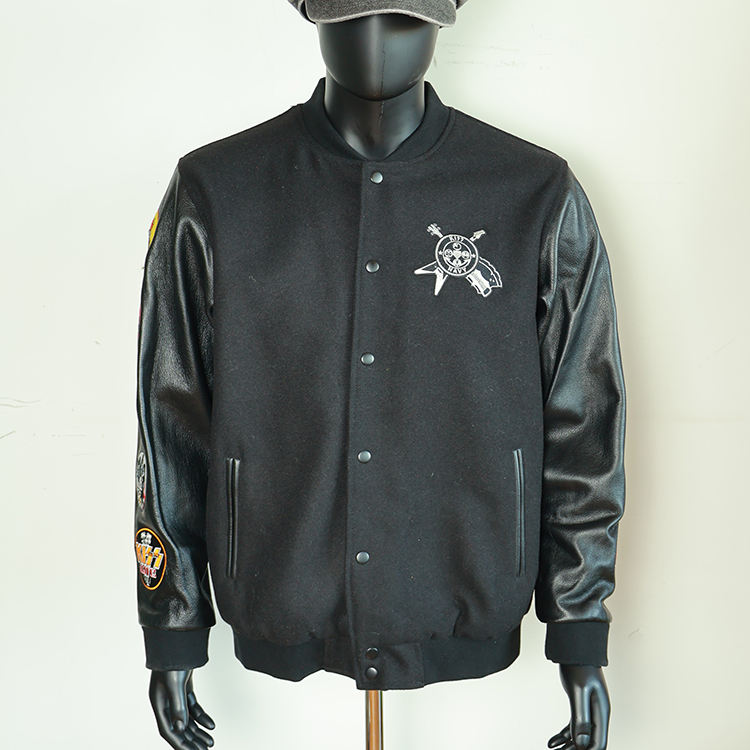
Custom Baseball Jersey
Custom baseball jerseys built for teams, leagues, schools and apparel brands, with authentic construction and decoration craftsmanship. SELMOND offers tackle-twill lettering, sublimated graphics, embroidered team logos and chenille patches on mesh or solid polyester bodies. Full sampling, artwork proofing and flexible MOQ from 100 pieces.
Get a Quote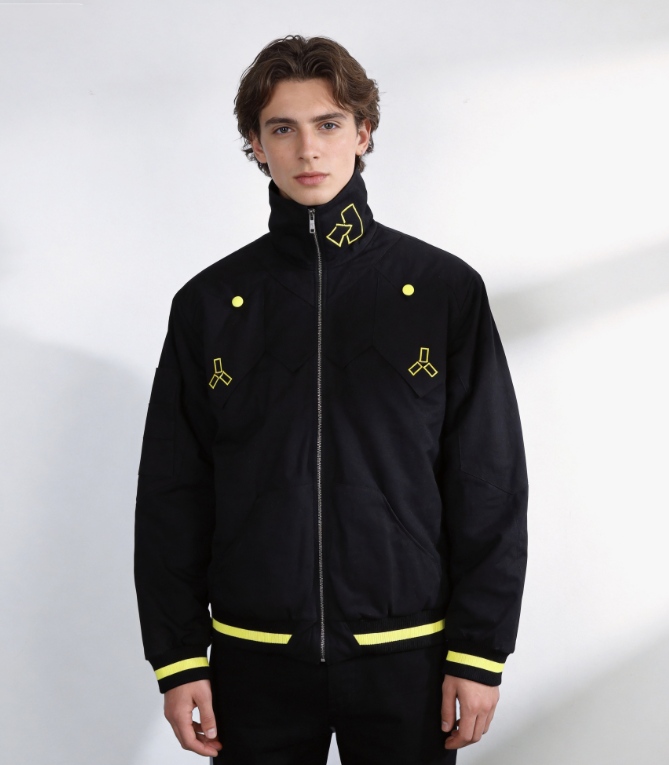
Custom Baseball Jersey Shirts
Baseball jersey shirts custom-manufactured with team names, player numbers and logos applied via tackle twill, embroidery, sublimation or screen print. SELMOND sources performance polyester fabrics, develops artwork, produces samples and runs bulk production with in-line quality control. OEM, ODM and private label supported from 100 pieces.
Get a Quote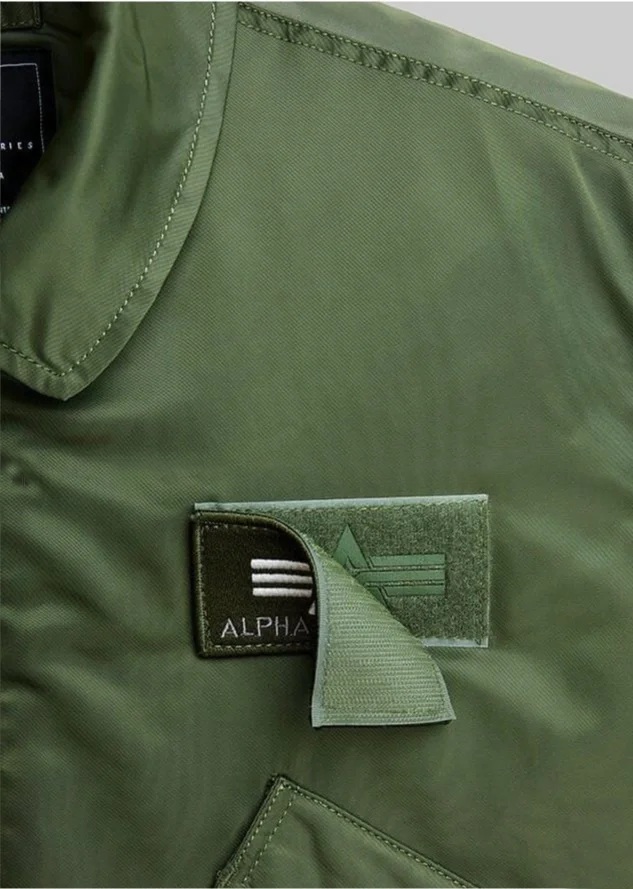
Chenille Patches
Chenille patches manufactured in-house with raised yarn, clean satin borders and durable twill or felt backing for varsity jackets, team apparel and caps. SELMOND produces custom shapes, sizes, colors and layered designs with embroidered details, supplied as individual patches or sewn directly onto garments during production.
Get a Quote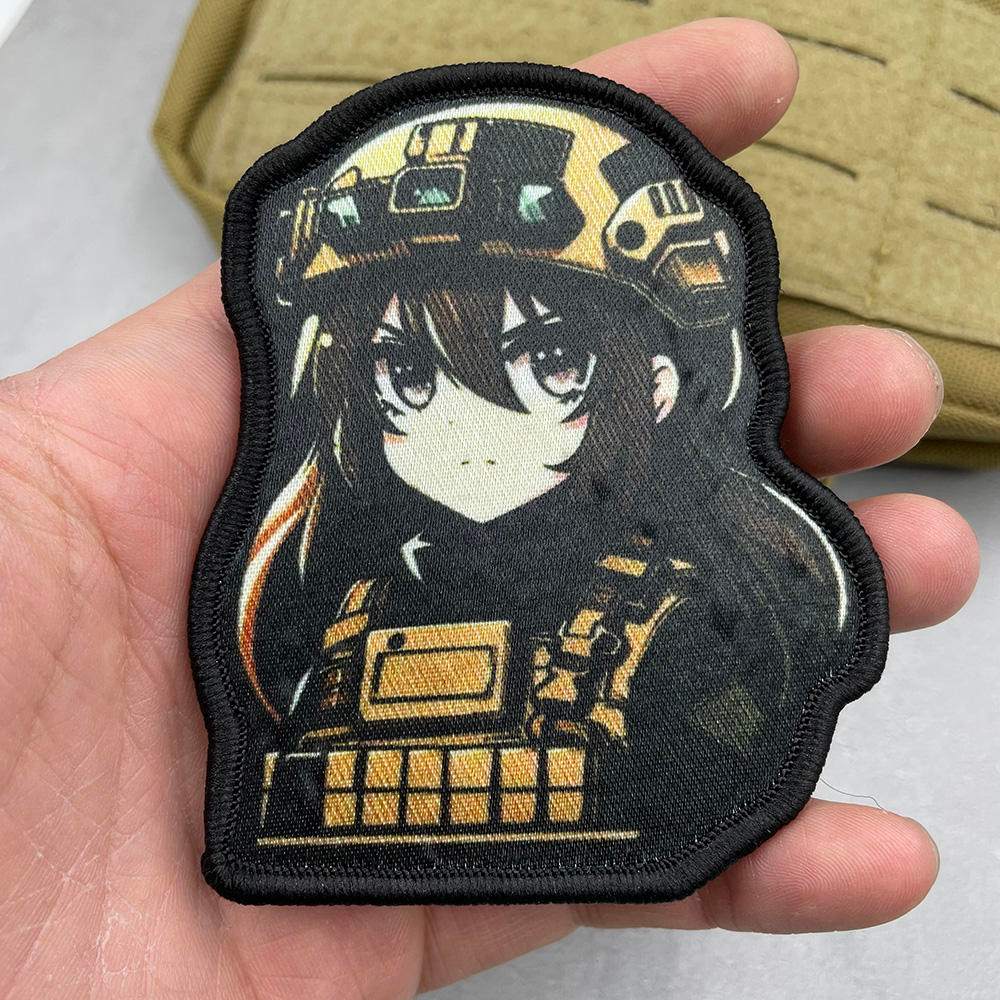
Embroidered Patches
Embroidered patches produced with flat, 3D puff or chain-stitch embroidery on twill, felt or canvas backing, finished with merrowed or laser-cut edges. SELMOND manufactures custom logo patches, team crests and monogram badges for varsity jackets, jerseys, caps and uniforms, supplied loose or applied in-house during garment production.
Get a Quote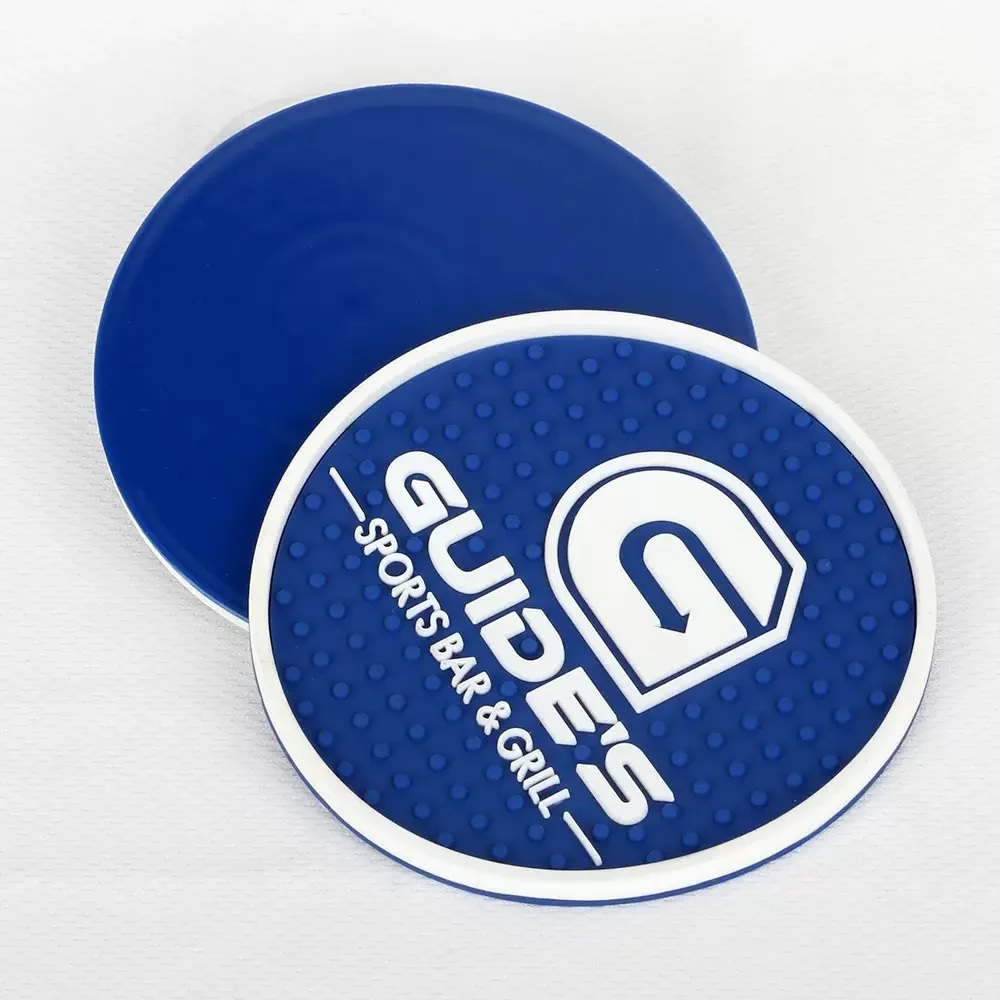
Tackle Twill Patches
Tackle twill patches combine layered twill fabric with tight satin-stitch borders to create the sharp, durable lettering and numbers seen on professional baseball jerseys and varsity jackets. SELMOND cuts, layers and stitches tackle-twill patches in single, double or triple color combinations, applied during production or supplied separately.
Get a Quote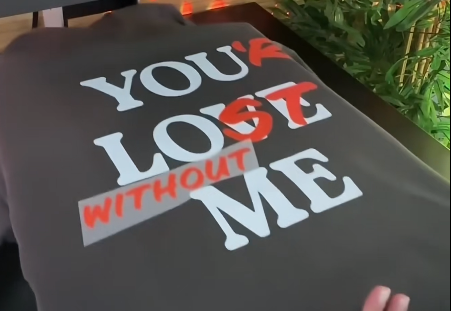
Sublimated Patches
Sublimated patches feature full-color, edge-to-edge graphics dye-sublimated onto polyester fabric, then cut and backed for sewing or heat-transfer application. SELMOND produces sublimated patches with photo-realistic logos, gradients and complex artwork that cannot be achieved with embroidery or chenille, ideal for modern team apparel and caps.
Get a Quote28+ Years Crafting Custom Appliqué Patches
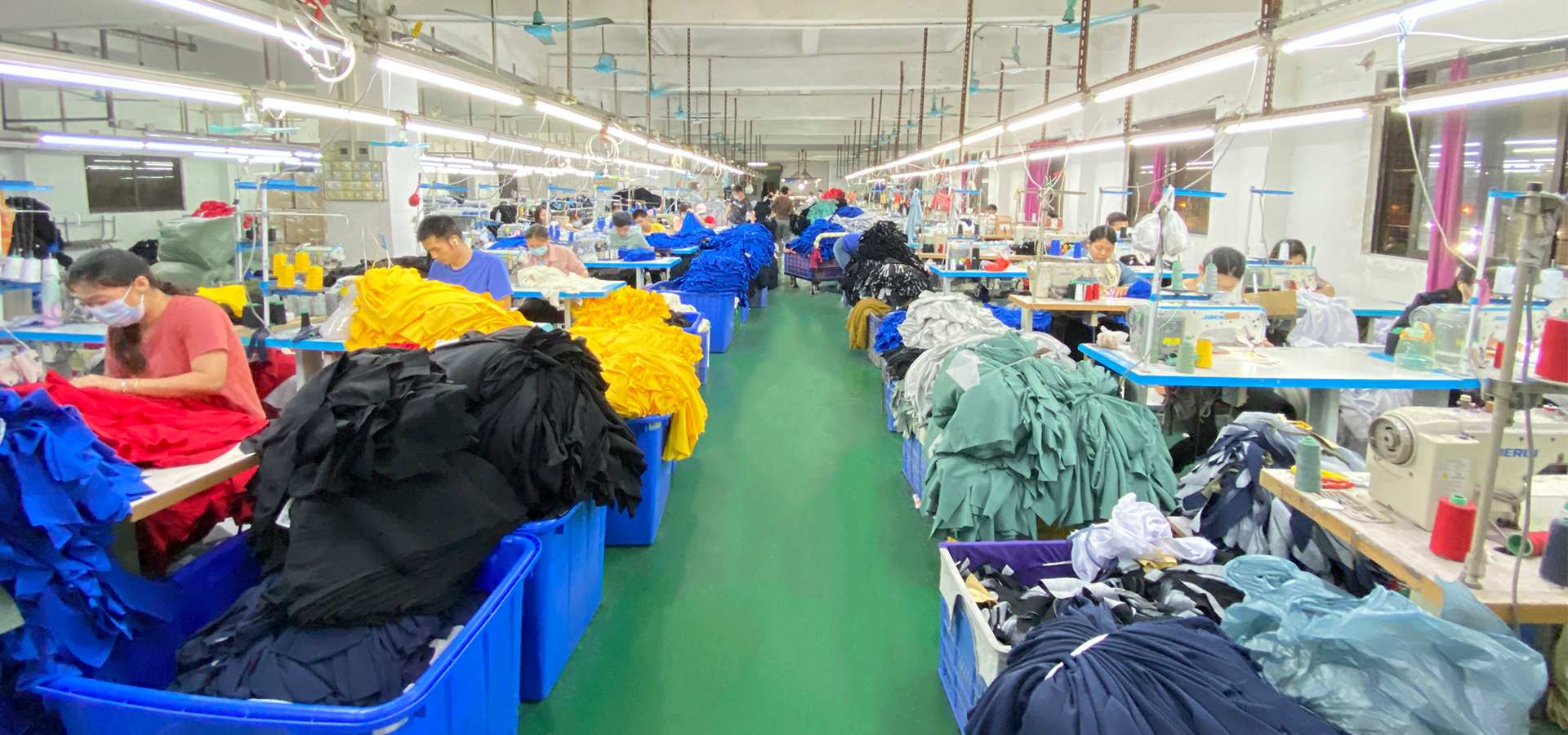
Founded in 1998 in Dongguan’s garment district, SELMOND has built its reputation on precision decoration for varsity jackets, jerseys and team apparel. Our in-house appliqué production combines laser cutting, multi-layer fabric stacking and satin-edge embroidery stitching to create dimensional patches that hold their shape and color through every season.
We’ve produced custom appliqué patches for over 2,000 brands, schools and sports teams worldwide — from single-color felt mascots to intricate multi-layer chenille-and-twill varsity letters. Every patch is cut, layered and stitched on our own floor, with full control over thread tension, edge finish and fabric choice, ensuring consistent quality whether your order is 100 pieces or 10,000.
SELMOND’s appliqué capability is backed by dedicated embroidery and cutting stations, a monthly capacity exceeding 80,000 decorated garments including custom varsity jackets, baseball jerseys, custom baseball caps and team uniforms, plus a design team ready to turn your artwork into production-ready layered patches. From concept to finished garment, we handle every step — so your brand gets varsity-grade decoration without managing multiple vendors.
Custom Appliqué Patches: Design & Durability Deep Dive
Fabric Selection & Layering Strategy
Every custom appliqué patch begins with the right fabric stack. SELMOND sources twill, felt, chenille and specialty fabrics from trusted mills across China, matching substrate weight, stretch and hand-feel to your garment base — wool varsity bodies, polyester jerseys or cotton caps — so layers sit flat without puckering or shifting through wear.
- Twill, felt, chenille and specialty fabrics sourced from trusted Chinese mills
- Substrate weight and stretch matched to garment base — wool, polyester or cotton
- Layering sequence planned to prevent puckering, tunneling or edge lift
- Color-fast, pre-shrunk materials tested for dimensional stability
Stitch Density & Thread Type
Appliqué durability lives in the stitch. SELMOND calibrates density between 4–6 stitches per millimeter depending on fabric weight and design detail, using polyester embroidery thread rated for colorfastness and abrasion resistance. Tighter density anchors edges; looser counts preserve fabric hand and reduce stiffness on lightweight jerseys.
- Stitch density calibrated 4–6 stitches/mm based on fabric weight and detail
- Polyester embroidery thread rated for colorfastness and abrasion resistance
- Density balanced to anchor edges without stiffening lightweight substrates
- Thread tension tuned per fabric to prevent thread breaks or looping
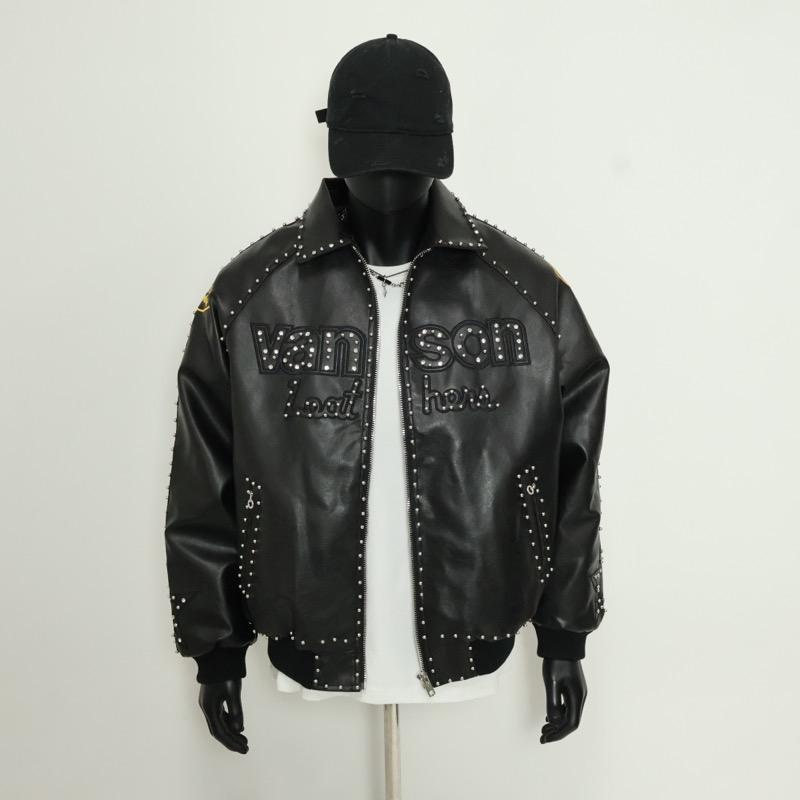
Edge-Finish Techniques for Clean Borders
The edge defines the patch. SELMOND offers satin-stitch borders — dense, glossy and crisp — for varsity letters and mascot logos, or whip-stitch finishes for softer, vintage-inspired aesthetics. Edge width, underlay and corner-turn programming are tuned per design to eliminate fraying, thread buildup or corner distortion after repeated laundering.
- Satin-stitch borders: dense, glossy finish for varsity letters and logos
- Whip-stitch option for softer, vintage or distressed aesthetics
- Edge width, underlay and corner programming tuned per design
- Techniques prevent fraying, thread buildup and corner distortion through wash cycles
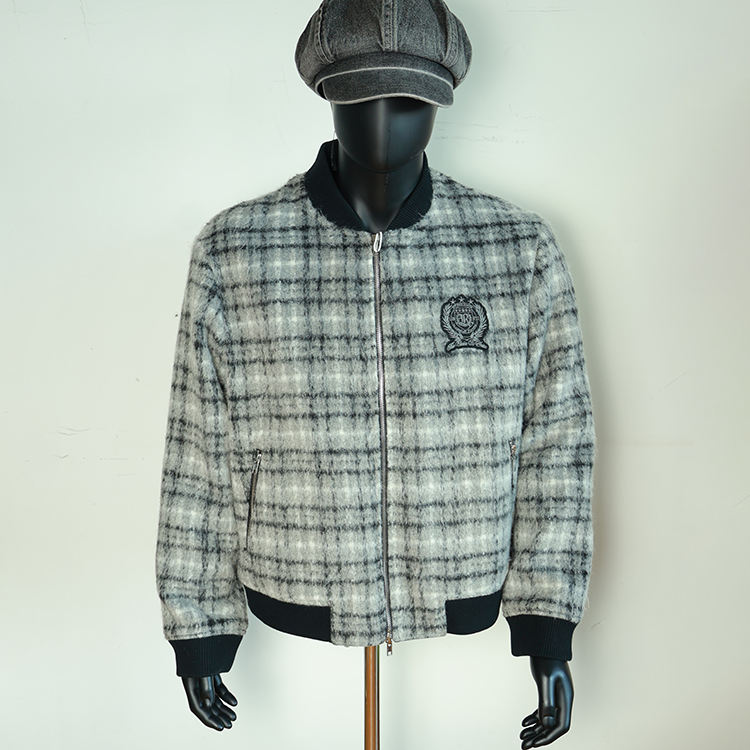
Wash-Test Durability & Production Planning
Before bulk production, SELMOND wash-tests custom appliqué patches through industrial cycles at 40°C and tumble-dry to verify edge integrity, color retention and dimensional stability. Design complexity — layer count, fine detail, gradient shading — directly impacts digitizing time, machine run-time and per-piece cost; the team provides transparent timelines and pricing at the artwork-proof stage.
- Industrial wash-test at 40°C plus tumble-dry before bulk approval
- Edge integrity, color retention and dimensional stability verified
- Design complexity assessed during digitizing for accurate time and cost estimates
- Transparent production timelines shared at artwork-proof stage
Custom Appliqué Patches vs. Chenille, Tackle Twill & Embroidery
Each decoration technique brings different strengths to varsity jackets and team apparel. Here’s how custom appliqué patches compare to the most common alternatives — so you can choose the right process for your design, fabric and durability needs.
← 左右滑动查看 →
How We Manufacture Custom Appliqué Patches
From artwork digitizing to final inspection, every custom appliqué patch follows a controlled, multi-layer process that ensures clean edges, secure stitching and long-lasting color—whether it’s a single logo or a full team run.
Design Digitizing & Artwork Setup
Your logo or design is converted into embroidery-ready stitch files, with layer sequencing, stitch density and color mapping optimized for multi-fabric appliqué construction.
Fabric Selection & Precision Cutting
Twill, felt or specialty fabrics are selected by color and weight, then laser- or die-cut to exact shape, ensuring clean edges and consistent sizing across every patch.
Base-Layer Stitching & Registration
The first stitch pass anchors placement guides onto the backing or garment, locking in position and preventing fabric shift during subsequent appliqué layers.
Appliqué Layer Placement & Tack-Down
Cut fabric pieces are positioned over the base stitch and tacked with a light zigzag or straight run, securing each layer before the final edge finish is applied.
Edge-Finish Stitching & Tension Control
A satin or zigzag border is sewn around every appliqué edge, with tight stitch tension and thread-color matching ensuring crisp, durable seams that resist fraying and lift.
Quality Inspection & Packaging
Each finished custom appliqué patch is inspected for thread breaks, edge alignment and color accuracy, then trimmed, pressed and packed for attachment or shipment to your team.
How to Order Custom Appliqué Patches from SELMOND
From artwork to finished patches on your varsity jackets or team apparel — follow these five steps to bring your layered fabric designs to life with our in-house decoration team.
Submit Your Artwork & Specifications
Send your logo, design or sketch along with fabric choices, thread colors, size requirements and placement details. Our team reviews appliqué-specific needs and confirms feasibility within one business day.
Review Design Proof & Color Matching
Receive a detailed artwork proof showing fabric layers, stitch paths and thread colors. Approve or request adjustments to ensure your custom appliqué patches match your brand standards perfectly.
Approve Physical Strike-Off Sample
We produce a physical strike-off of your custom appliqué patches on actual garment fabric. Check layering, color accuracy, stitch quality and placement before any bulk production begins.
Confirm Bulk Order & Production
Once the strike-off is approved, finalize your order quantity starting from 100 pieces. Your custom appliqué patches enter our in-house decoration schedule with full quality control at every stage.
Receive Finished Garments or Patches
Completed varsity jackets, jerseys or stand-alone patches are inspected, packed and shipped globally. Track your order and receive all artwork files and production records for future re-orders.
Varsity Brands & Teams Trust SELMOND Custom Appliqué Patches
We ordered 250 varsity jackets with custom appliqué patches for our school’s letterman program. Every patch came out sharp, colors stayed vibrant after 15+ washes, and delivery was two days early. Our students love the layered look.
SELMOND’s appliqué work is next-level. We launched a limited varsity collection with layered chenille and fabric patches — sold out in 72 hours. The design accuracy from artwork to finished garment was flawless, and our customers noticed immediately.
As a screen printer adding decoration services, I needed a partner who could handle custom appliqué patches at 100-piece MOQ. SELMOND delivered strike-offs in 5 days, and the patches held up perfectly through our quality tests. Now a regular supplier.
Custom Appliqué Patches — Frequently Asked Questions
What is the minimum order quantity for custom appliqué patches?
What fabrics can custom appliqué patches be applied to?
Can I combine custom appliqué patches with embroidery or chenille lettering on the same jacket?
What is the maximum design size and color count for custom appliqué patches?
How durable are custom appliqué patches after washing and regular wear?
What file format and resolution do you need for custom appliqué patches?
What is the lead time for custom appliqué patch samples and bulk production?
Is there a cost for custom appliqué patch samples, and is it refundable?
The Complete Buyer’s Guide to Custom Appliqué Patches for Teams, Brands & Apparel Decorators
This guide walks you through everything you need to know about sourcing custom appliqué patches—from materials and construction quality to choosing the right manufacturer, avoiding common mistakes, and understanding pricing tiers to make confident, cost-effective decisions.
1. What Are Custom Appliqué Patches?
Custom appliqué patches are layered fabric decorations sewn or bonded onto a garment base, built from one or more pieces of cut fabric — typically felt, twill, chenille or leather — stitched down with satin, zigzag or straight-stitch borders. Unlike embroidered patches that use thread alone to form a design, appliqué starts with solid fabric shapes, making it faster to produce, lighter in weight and cleaner for large letters, numbers and bold logos.
The technique dates to early letterman jackets in the 1930s, when chenille fabric was die-cut into varsity letters and chain-stitched onto wool bodies. Today appliqué remains the go-to method for custom baseball jerseys, varsity jackets, custom baseball caps and team uniforms because it delivers high-impact branding at lower per-piece cost than dense embroidery, especially above 4-inch artwork.
Buyers choose appliqué when design size, texture contrast or budget matter more than fine detail. A single chenille letter can replace 15,000 embroidery stitches, cutting decoration time by half and eliminating puckering on lightweight jerseys and caps.
2. The Evolution of Appliqué Patches in Team & Brand Apparel
Appliqué patches trace back to 18th-century military uniforms and traditional quilting, where fabric layers were stitched onto base garments to reinforce wear points and display rank or unit insignia. By the early 1900s, American colleges adopted felt lettering for athletic awards, setting the foundation for varsity culture.
The 1950s marked the golden age of chenille letters on wool-bodied letterman jackets, with high schools and universities across the United States issuing custom appliqué patches to athletes and club members. Chenille — a looped, textured yarn — delivered dimension and durability that flat embroidery could not match, and the chenille varsity patch became the visual shorthand for team achievement.
Today’s custom appliqué patches extend far beyond the athletic field. Independent apparel brands, streetwear labels, schools, clubs and corporate teams use multi-layer tackle-twill, laser-cut chenille and mixed-media appliqué to build brand identity on varsity jackets, custom baseball jerseys, custom baseball caps, custom beanies and baseball uniforms. Digital embroidery machines, sublimation printing and precision cutting have expanded design possibilities from simple block letters to full-color crests, gradient fills and intricate logo work — all while maintaining the tactile, premium finish that defines authentic team apparel.
3. Types of Custom Appliqué Patches
Custom appliqué patches fall into five construction categories, each delivering distinct texture, durability and visual impact. Understanding these types ensures you specify the right technique for varsity jackets, team jerseys, caps and uniforms.
Chenille Patches
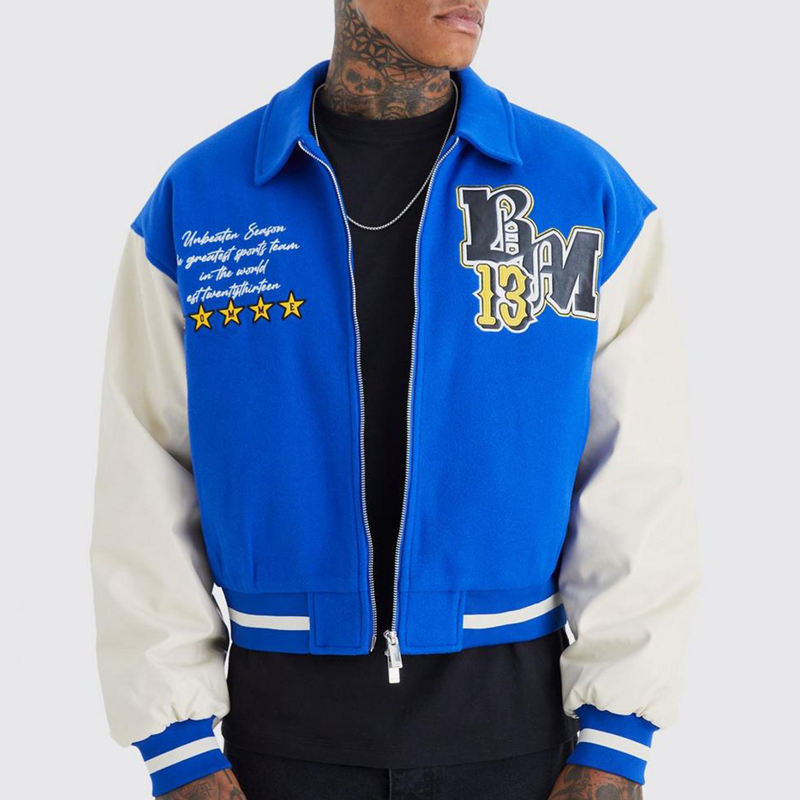
Chenille patches use looped yarn stitched onto a felt or twill backing to create a raised, plush surface. The yarn loops sit 3–5 mm high, delivering the classic varsity-letter look.
Chenille is the signature decoration for varsity jackets, letterman jackets and team patches. It resists pilling and holds color through repeated wash cycles when properly secured with satin-edge stitching.
Twill Appliqué
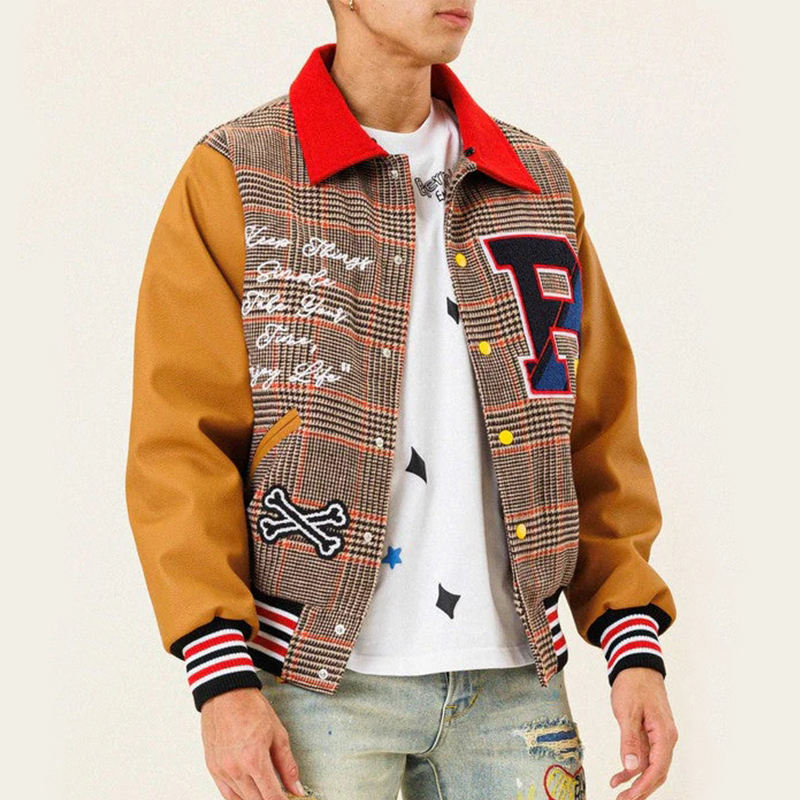
Twill appliqué cuts shapes from woven twill fabric and sews them flat onto the garment with a satin-stitch border. Single-, double- or triple-layer twill creates depth without bulk.
This technique is standard for baseball-jersey numbers, team names and tackle-twill lettering. Edges stay sharp and colors remain vivid across hundreds of washes.
Felt Appliqué
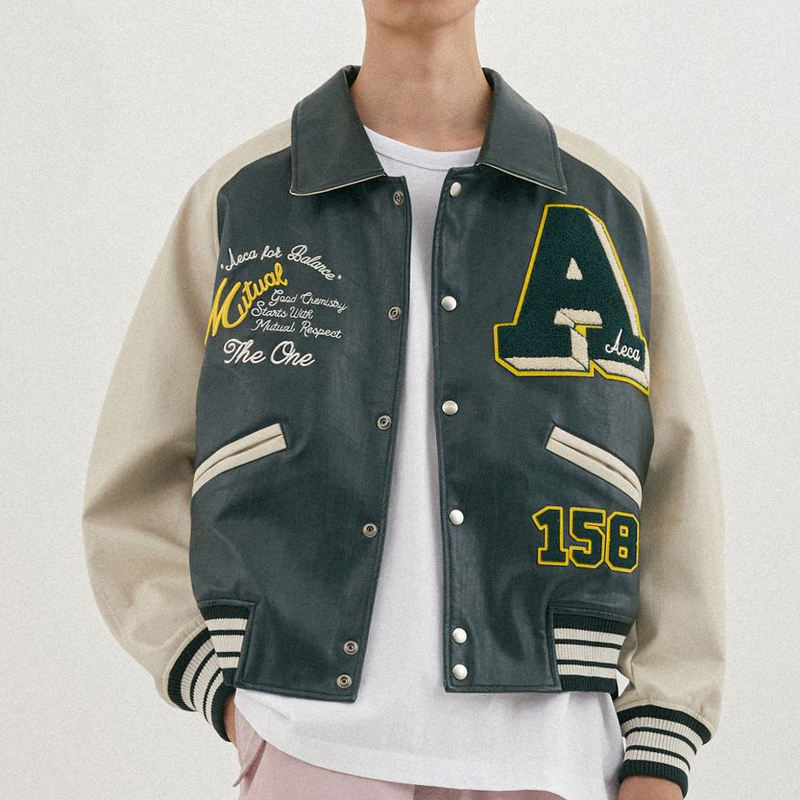
Felt appliqué uses die-cut wool or synthetic felt pieces stitched to the base fabric. The matte, non-woven surface offers a vintage aesthetic at lower cost than chenille.
Felt works well for school crests, retro patches and budget team uniforms. Durability is moderate; edges can fray without reinforced stitching.
Leather Appliqué
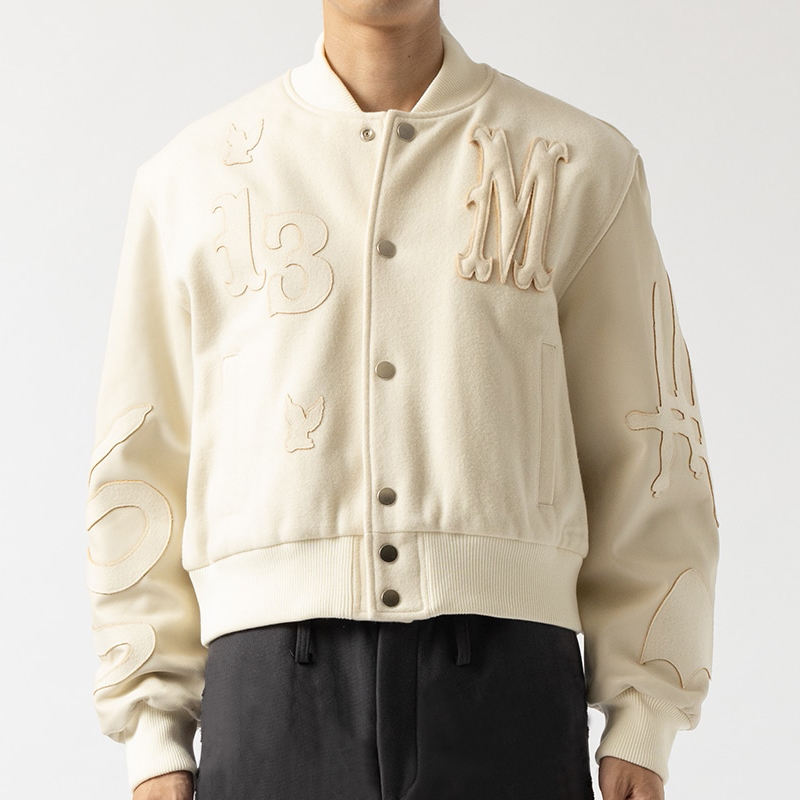
Leather appliqué attaches genuine or PU leather cutouts via edge stitching or adhesive backing. The material adds premium texture and contrasts well against melton wool or twill.
Leather patches appear on varsity-jacket sleeves, cap panels and luxury team apparel. Genuine leather develops patina; PU versions maintain uniform color and cost less.
Mixed-Media Patches
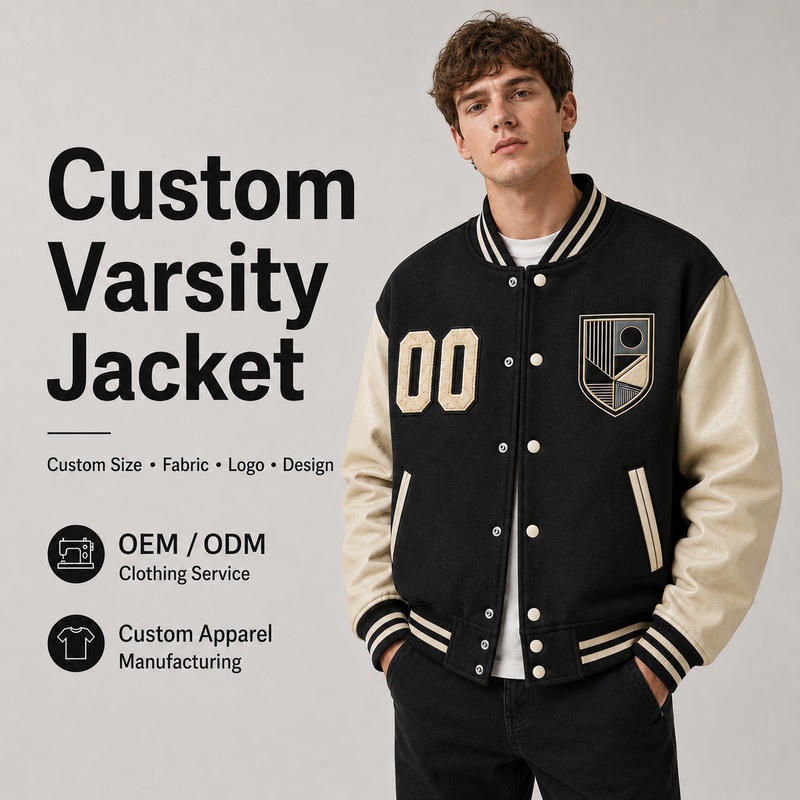
Mixed-media patches layer chenille, twill, embroidery and leather within a single design. A typical varsity letter combines chenille fill, twill borders and an embroidered team logo.
This approach maximizes visual depth and brand detail. SELMOND produces mixed-media patches in-house, ensuring alignment and consistent stitch density across all decoration layers.
4. Materials & Fabrics for Custom Appliqué Patches
Material selection defines patch performance, cost and visual impact. Base fabric, thread type, chenille weight and backing method each influence durability, washability and final price tier.
| Material | Durability | Typical Use | Price Tier |
|---|---|---|---|
| Twill (polyester/cotton) | High — resists fray, 30+ washes | Tackle-twill numbers, team lettering, varsity patches | Mid |
| Felt (wool-blend) | Medium — prone to pilling after 20 washes | Vintage varsity patches, school letters | Low |
| Chenille yarn (acrylic/rayon) | Medium-high — holds texture, occasional snag risk | Varsity letters, retro patches, premium logos | High |
| Leather (genuine/PU) | Very high — water-resistant, 50+ washes | Premium cap patches, luxury varsity badges | High |
| Canvas (cotton) | High — rugged, industrial wash safe | Workwear patches, outdoor team gear | Mid |
| Polyester thread | Very high — colorfast, UV-stable | All patch types, outdoor apparel | Low |
| Rayon thread | Medium — vibrant sheen, fades faster | Indoor team uniforms, decorative patches | Low |
| Metallic thread | Low-medium — prone to fray under friction | Fashion patches, limited-edition designs | Mid |
| Iron-on adhesive backing | Medium — 15–25 washes, heat reactivates | Retail patches, DIY team kits | Low |
| Sew-on backing | Very high — permanent, industrial-grade | Professional team uniforms, varsity jackets | Low |
| Velcro (hook-and-loop) | High — removable, 100+ attach cycles | Tactical gear, interchangeable team patches | High |
5. Customization & Decoration Options for Custom Appliqué Patches
Every custom appliqué patch begins as a set of design decisions — shape, color, border finish and embellishment — that together define look, durability and unit cost. SELMOND supports die-cut shapes, Pantone-matched thread, merrowed or heat-sealed edges, multi-layer construction and metallic or 3D puff details, with lead-time and pricing scaling by complexity.
Size and Shape Options
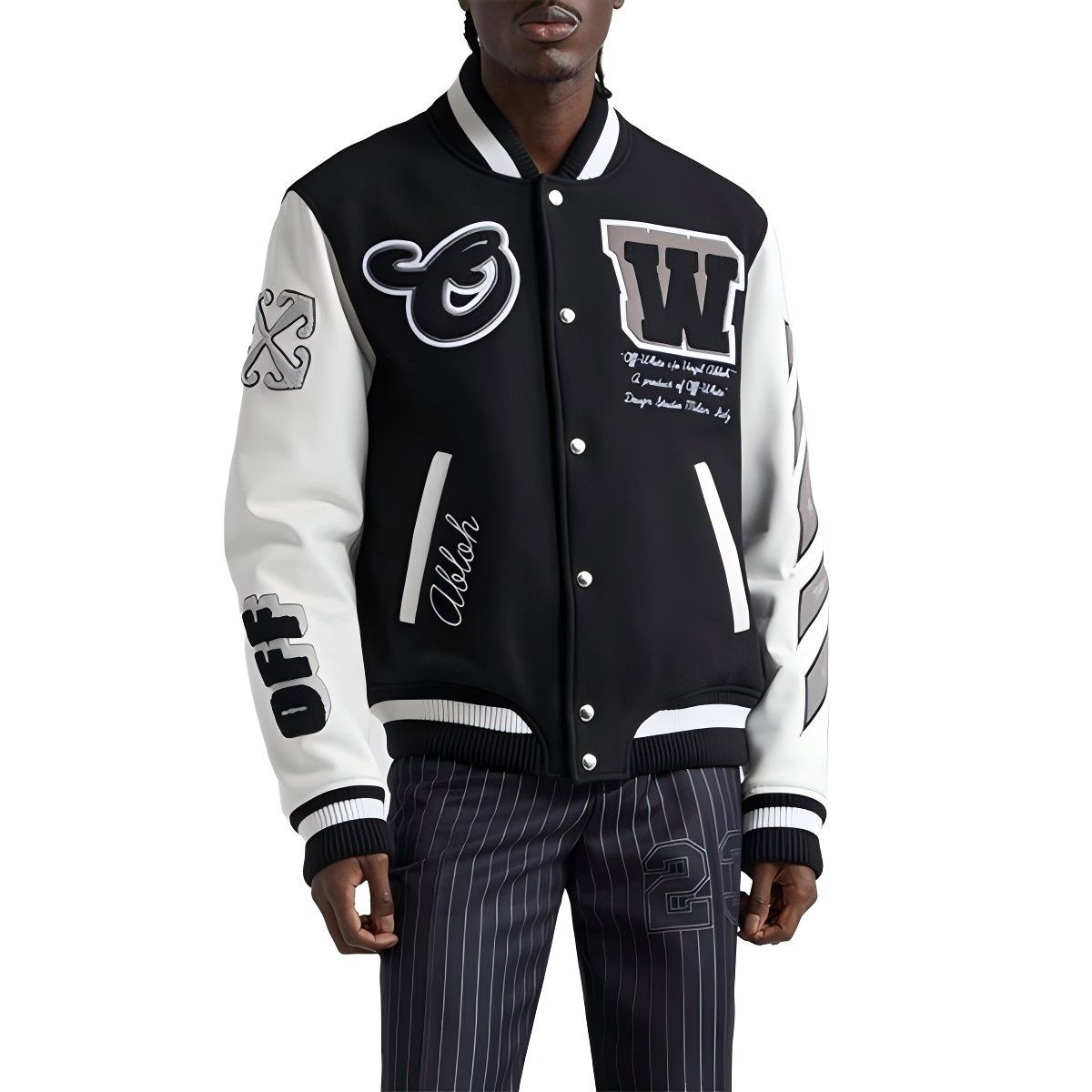
Die-cut patches follow any vector outline — mascots, script logos, irregular badges — while standard shapes (circle, rectangle, shield) use stock dies that save tooling time. Custom die-cutting adds 2–3 days for pattern preparation and increases cost by 8–15% versus standard shapes.
SELMOND digitizes artwork into production-ready outlines, grades patches across size tiers (2″, 3″, 4″+) and maintains die files for re-orders, ensuring consistent edge alignment and stitch density at every dimension.
Color Matching and Thread Libraries
Pantone references ensure brand-color accuracy; SELMOND cross-references PMS codes to polyester and rayon thread libraries from trusted mills. Standard palettes cover 120+ colors; custom dye-lots require 500-piece minimums and add 7–10 days.
Thread choice affects sheen and washability — polyester holds color through 50+ industrial washes, while rayon delivers higher luster for retail presentation. SELMOND provides digital thread cards and strike-off samples before bulk production.
Border Finishes
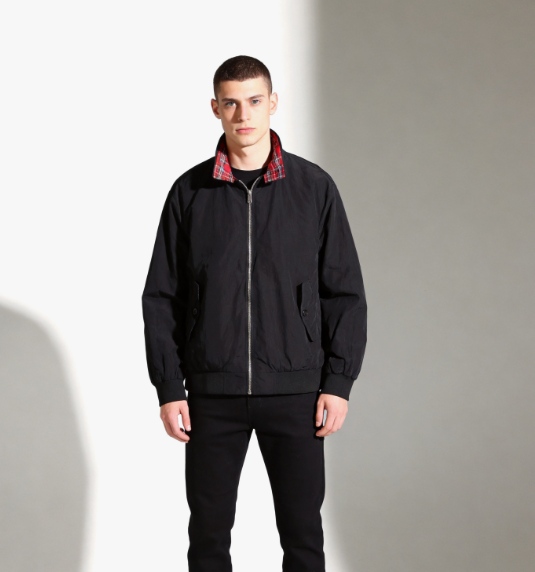
Merrowed edges — tight overlock stitching — are the varsity-jacket standard, offering durability and a classic raised profile. Laser-cut borders eliminate bulk for layered designs, while heat-sealed edges work best on synthetic twill for clean, fray-free appliqué on jerseys.
Each finish impacts sew-down time: merrowed patches require careful hoop placement, laser-cut pieces nest tightly for multi-color layouts, and heat-sealed edges allow faster automated application, reducing decoration labor by 20–30%.
Layering and Embellishments
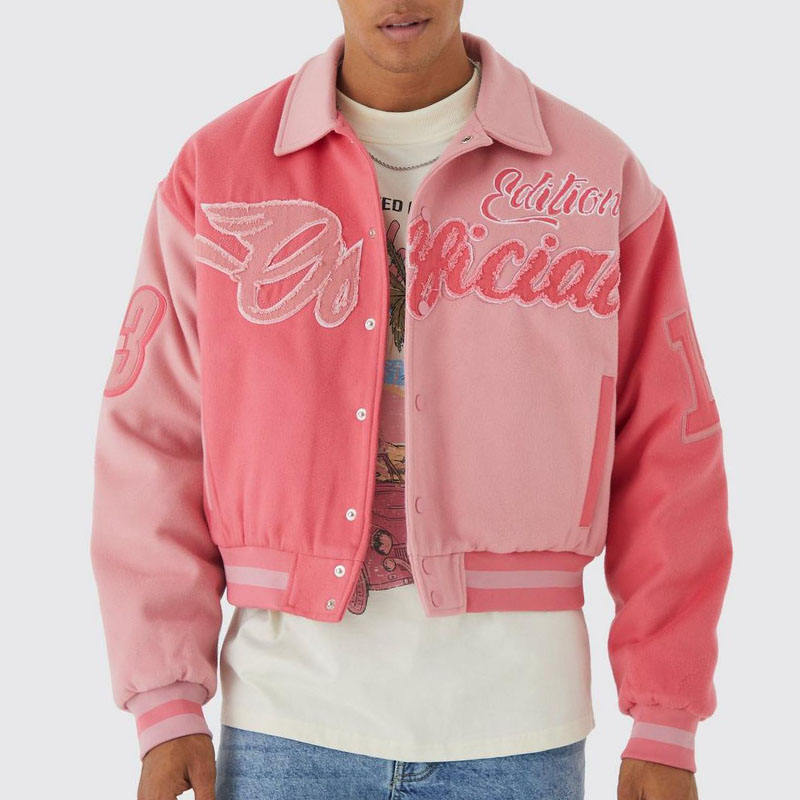
Multi-level appliqué stacks chenille, twill and embroidered layers for depth — common in varsity letters and team crests. Each additional layer adds 1–2 days to sampling and raises per-piece cost by 12–18%.
Metallic threads, 3D puff embroidery and sequin accents elevate retail patches; SELMOND digitizes puff areas separately to prevent thread breakage and tests metallic tension on sample strikes. All embellishment proofs are photographed and approved before bulk runs begin.
6. Key Quality Indicators in Custom Appliqué Patches
Quality separates a patch that holds through fifty washes from one that frays after ten. Inspect stitch density, edge finish, adhesive bond, colorfastness and backing integrity before committing to bulk production.
Stitch Density and Uniformity
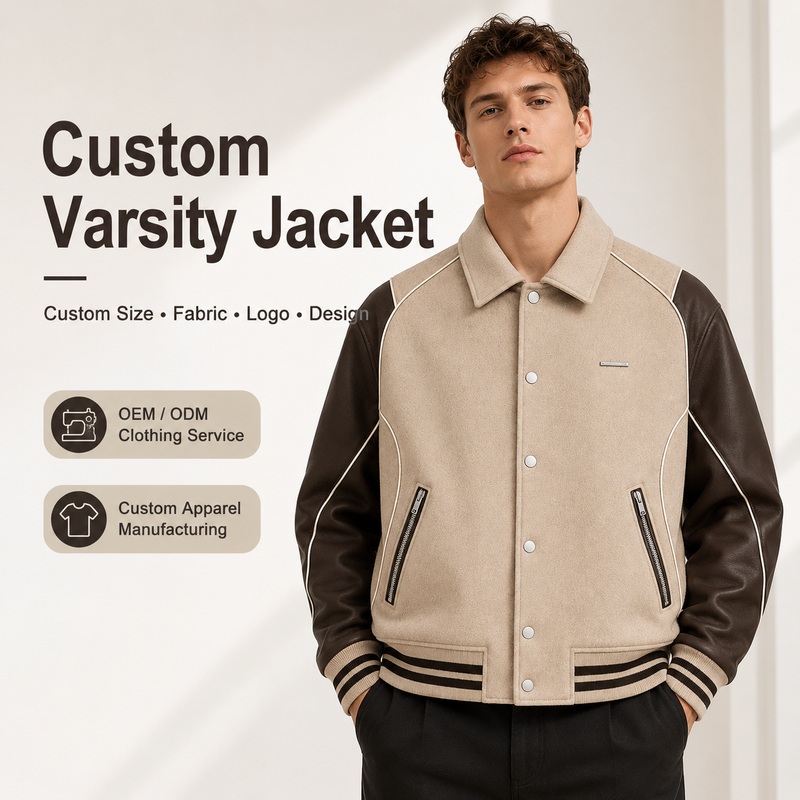
Professional embroidered appliqué patches run 5,000–7,000 stitches per square inch for dense, clean edges. Lower density leaves gaps; excessive density puckers fabric. SELMOND digitizes artwork to balance coverage and flexibility, ensuring letters and logos sit flat without distortion.
Uniform tension across the patch prevents thread breaks and skip-stitches. Request a strike-off to verify stitch consistency under magnification.
Edge Finishing and Fraying Resistance
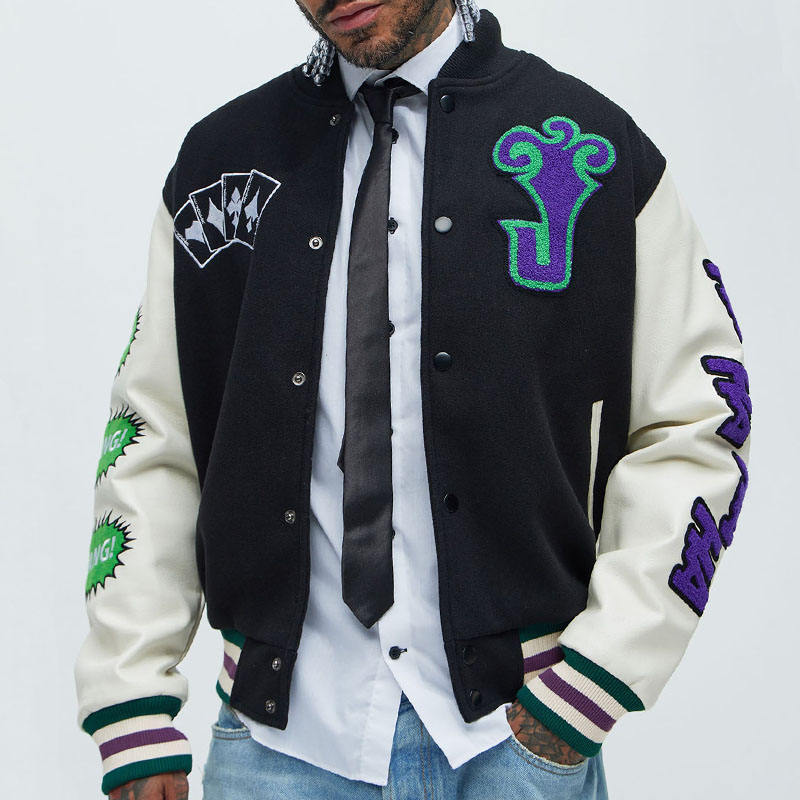
Chenille and twill edges must be fully enclosed by satin-stitch or merrowed borders to prevent unraveling. Heat-cut polyester twill resists fraying better than woven cotton blends. SELMOND applies tight zigzag or overlock stitching on all appliqué perimeters, tested through industrial wash cycles to confirm edge integrity.
Adhesive Strength for Iron-On Patches
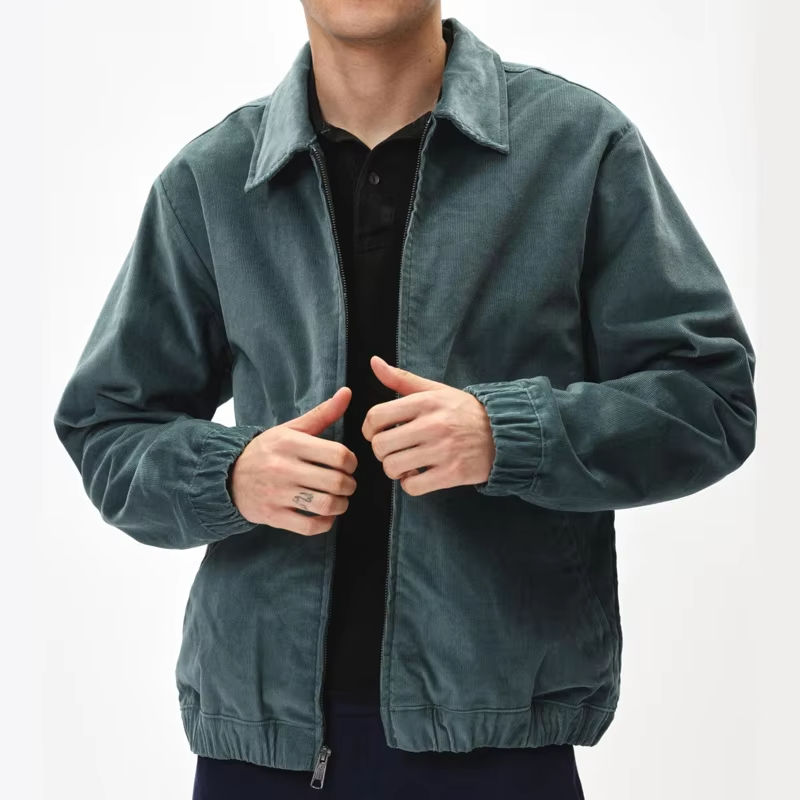
Iron-on patches use thermoplastic adhesive film rated to withstand 40+ home washes at 60 °C. Poor adhesive lifts at corners or fails under steam. SELMOND sources adhesive from certified mills and conducts peel-strength tests on every batch, ensuring patches bond permanently to melton wool, cotton twill and polyester jersey without residue.
Pre-Production Sample Evaluation
Request a physical sample with your exact fabric, thread colors and decoration layout before bulk. Check stitch count, edge finish, color match against Pantone or artwork file, and backing adhesion. SELMOND ships samples within 7–10 days and revises artwork or decoration at no charge until approval, keeping all specs on file for consistent re-orders.
7. How to Choose a Custom Appliqué Patches Manufacturer
Selecting a custom appliqué patches manufacturer determines your speed to market, unit economics and decoration quality. Evaluate MOQ thresholds, design support depth, certifications, production capacity and logistics infrastructure before committing to any partner.
MOQ Flexibility and Order Scalability
Minimum order quantities range from 50 to 1,000 pieces depending on the supplier. SELMOND starts at 100 pieces per style/color, enabling brands to test designs, reduce inventory risk and launch capsule collections without tying up capital.
Lower MOQs are critical for independent designers, screen printers and startups managing cash flow. Confirm whether the factory maintains your artwork, patterns and trims on file for faster re-orders as volume grows.
Design and Digitizing Services
In-house design teams convert sketches, photos or concepts into production-ready artwork, including logo digitizing, patch layout, size-set grading and decoration proofs. This support shortens lead times and eliminates third-party digitizing fees.
Ask whether the manufacturer provides mockups, strike-offs and sample garments before bulk production. SELMOND offers full artwork development from concept to tech pack, ensuring decoration placement and stitch density meet your brand standards.
Certifications and Production Capacity
Quality certifications — ISO 9001, OEKO-TEX, WRAP, BSCI — signal consistent processes, safe materials and ethical labor. Monthly capacity above 50,000 pieces indicates dedicated machinery, stable staffing and the ability to scale with your brand.
SELMOND runs over 80,000 pieces per month across cut-and-sew and decoration lines, with in-house embroidery, chenille, tackle-twill and sublimation stations ensuring decoration consistency and faster turnaround than brokers.
Communication and Global Logistics
Responsive communication — email, WhatsApp, WeChat — and multilingual support reduce errors and speed approvals. Payment flexibility (T/T, PayPal, credit card, USDT) and tiered deposit terms (100% first order, down to 30% for long-term partners) improve cash flow.
Shipping options should include DDP, DDU, FOB and express courier. SELMOND coordinates global logistics to the United States, Canada, Europe, Australia, Russia and the Middle East, with all patterns and trims records kept on file for seamless re-orders.
8. Common Mistakes When Ordering Custom Appliqué Patches
Even experienced brands lose time and money on preventable patch-order errors. Five recurring mistakes account for most production delays, quality disputes and re-order costs — each avoidable with clear specification and sample approval upfront.
Skipping Sample Approval
Ordering bulk without a physical strike-off locks in thread color, stitch density and edge finish before you confirm they match your artwork. A 3–5 day sample delay prevents a 3,000-piece mis-match.
SELMOND provides decoration strike-offs and sample garments before any production run, letting you verify chenille height, tackle-twill layer alignment and thread sheen under real light.
Ignoring Fabric-Weight Compatibility
Heavy chenille patches on lightweight mesh jerseys pucker and distort after the first wash; 280 GSM melton wool supports multi-layer tackle-twill where 180 GSM polyester tricot cannot.
Match patch weight and backing to garment fabric during the tech-pack stage, not after samples arrive wrinkled.
Underestimating Custom-Color Lead Times
Standard thread libraries ship same-week; custom Pantone-matched chenille yarn adds 10–14 days to sampling. Brands that assume all colors are stock miss launch windows.
Specify Pantone codes and request a thread-card proof early, especially for school or league colors outside the core 20-shade range.
Choosing Iron-On for High-Wash Items
Heat-transfer adhesive backing fails after 15–20 industrial washes; team jerseys and school jackets require lock-stitch or merrowed-edge sew-on patches.
Reserve iron-on for sample garments, influencer one-offs or retail items worn occasionally — never for uniforms laundered weekly.
9. Pricing & Cost Breakdown for Custom Appliqué Patches
Custom appliqué patch pricing is driven by five factors: finished size (measured in square inches), total stitch count, material type (chenille runs 15–25% higher than twill due to yarn and labor), backing choice (heat-seal, iron-on or sew-on), and order quantity. A 3-inch chenille letter typically carries 8,000–12,000 stitches, while a 4-inch tackle-twill number averages 5,000–7,000.
SELMOND’s MOQ starts at 100 pieces per design, with unit cost dropping 30–40% as volume scales to 1,000+ pieces. Setup fees — artwork digitizing, thread matching and first-sample strike-off — range from $30 to $80 per design and are waived on repeat orders when files remain on record. Sample patches ship within 5–7 days at $15–$25 each, fully refundable against bulk orders of 250 pieces or more.
Lead time shortens with volume: 100-piece runs require 18–22 days from artwork approval, while 1,000+ piece orders benefit from dedicated production slots and ship in 15–18 days, all decoration and quality-control steps included.
| Quantity Tier | Price per Patch (USD) | Lead Time |
|---|---|---|
| 100–249 pcs | $2.80–$4.50 | 18–22 days |
| 250–499 pcs | $2.20–$3.60 | 16–20 days |
| 500–999 pcs | $1.80–$2.90 | 15–18 days |
| 1,000+ pcs | $1.50–$2.40 | 15–18 days |
10. Steps to Launch Your Brand with Custom Appliqué Patches
Launching a brand with custom appliqué patches follows a proven workflow from artwork to finished garment. SELMOND’s nine-step process — inquiry, artwork development, fabric sourcing, sampling, approval, bulk production, quality control, decoration and logistics — keeps timelines predictable and decoration quality consistent across re-orders.
Design Prep & Artwork Finalization
Submit vector artwork (AI, EPS, PDF) or high-resolution raster files at 300 dpi minimum. SELMOND’s design team digitizes logos, grades lettering across size sets and produces decoration proofs showing exact thread colors, stitch density and layer sequence.
Clients starting with sketches or photos receive full tech-pack development, including patch placement, size specs and Pantone thread matching, ensuring production-ready files before any sample is cut.
- Vector formats (AI, EPS, PDF) preferred for clean digitizing
- Pantone thread colors matched to brand guidelines
- Decoration proofs show exact stitch layout and layer order
Sampling & Approval
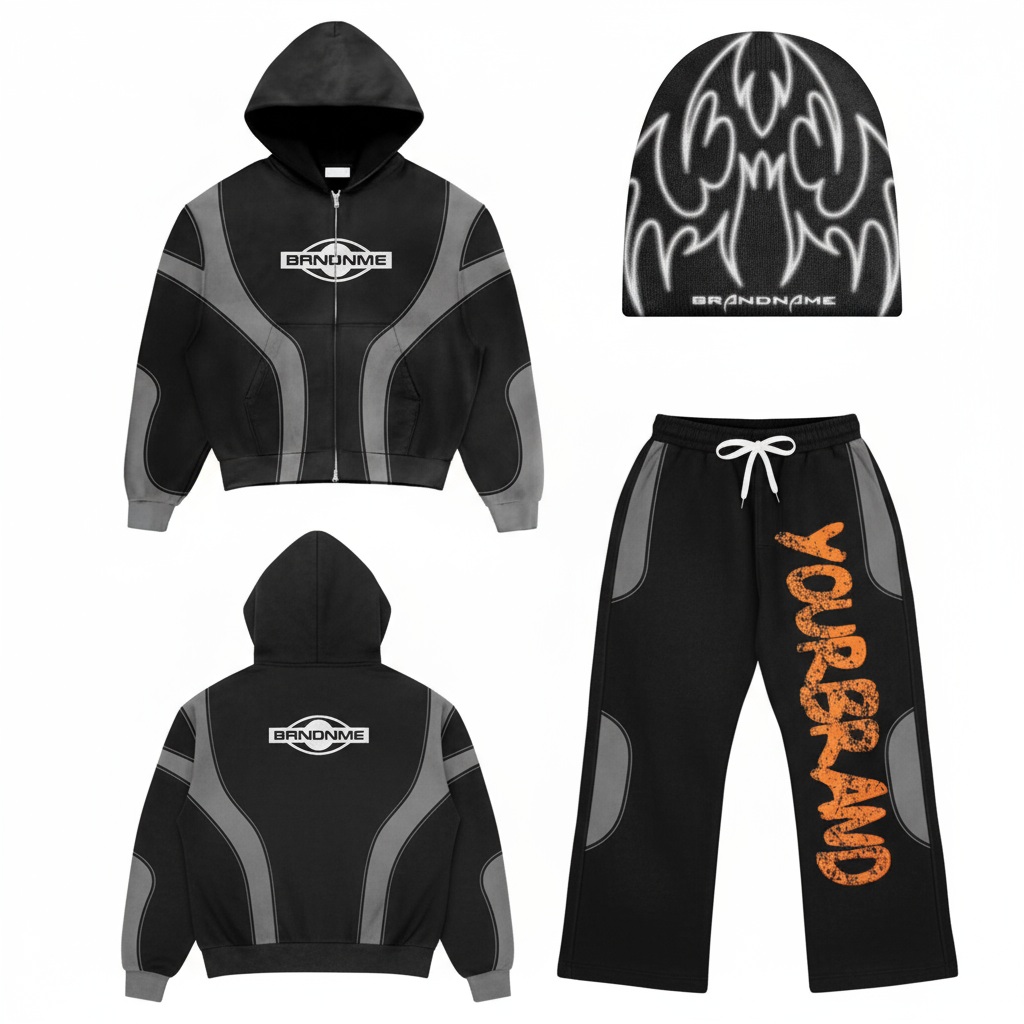
Request a physical sample with the patch applied to your chosen garment base — varsity jacket, jersey or cap. SELMOND produces decoration strike-offs and full sample garments, letting you assess chenille height, tackle-twill edge finish and thread tension before committing to bulk.
Approval locks in fabric, thread colors, patch dimensions and attachment method, with all specs stored on file for fast re-orders and seasonal updates.
Bulk Ordering & Production
MOQ starts at 100 pieces per style and colorway, with deposit terms stepping from 100% on first orders to 30% for established partners. Lead time runs 25–35 days after artwork and deposit, covering fabric sourcing, cut-and-sew, decoration and in-line quality control.
Patterns, artwork files and trims records stay on file, enabling consistent re-orders and streamlined capsule drops without re-sampling every season.
Application Best Practices
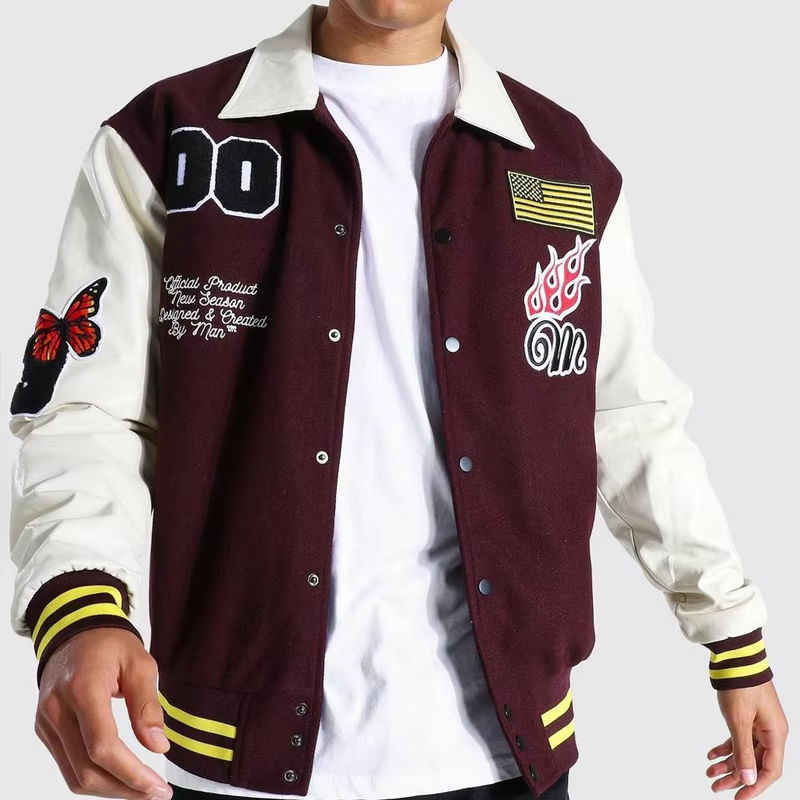
Sew-on patches deliver superior durability for team jerseys and varsity jackets subject to frequent washing and high abrasion. Use a zigzag or straight lockstitch around the perimeter, with thread color matched to the patch border.
Iron-on backing suits low-wash retail items and quick customization, applied at 320–340°F for 12–15 seconds under firm pressure, though a few perimeter tack stitches add insurance against edge lift over time.
Ready to Order Custom Appliqué Patches?
Get fast artwork proofs, decoration samples, and a detailed quote — 100-piece MOQ, backed by 28+ years of varsity apparel expertise.